About TIG Welders
From thin stainless to heavy aluminium, you'll find a TIG welder here for the work you do. We stock DC and AC/DC TIG welding machines, with HF and lift start, pulse models, and air or water cooled options. There are portable inverter TIG welders for site and workshop, and larger machines for production, for single phase, dual voltage and three phase supplies. We've got foot pedals too. Choose from brands including GYS, Jasic, Parweld and Stealth.
TIG Welders
-
 GYSGYS-045682
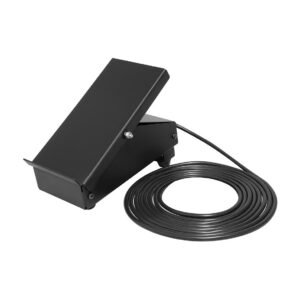
GYS RC-FA1 TIG and MMA Foot Pedal Remote Control, 4m
- Current adjustment from minimum to 100% of the machine setting
- Use when the power source cannot sit beside the work
- 7-pin connector
GYS-045682£288.51 ex VAT£346.21 inc VAT -
 JasicJFC-01
Jasic JFC-01 TIG Foot Pedal for JT-200A, JT-200D and JT-315D
- Hands-free amperage control during TIG welding
- Gives finer control over heat input
- Helps give cleaner starts and better control on tight welds
JFC-01£241.80 ex VAT£290.16 inc VAT -
 JasicJFC-05
Jasic JFC-05 TIG Foot Pedal for JT-200DS and JT-200P-PFC
- Variable amperage control, adjusted by foot while welding
- Steel housing with non-slip tread
- Plug-and-play connection
JFC-05£259.07 ex VAT£310.88 inc VAT -
 JasicJFC-06
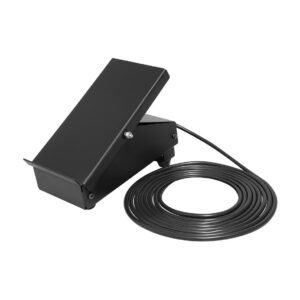
Jasic JFC-06 TIG Foot Pedal for JT-500D
- Modulates welding current by foot
- Finer control over starts, stops and transitions in TIG welds
- Frees the hands for torch control and reduces fatigue
JFC-06£241.80 ex VAT£290.16 inc VAT -
 JasicJFC-07
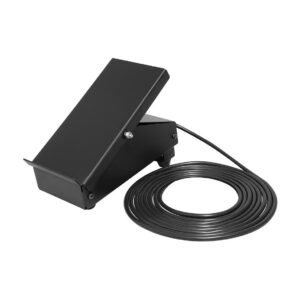
Jasic JFC-07 TIG Foot Pedal for JT-400P, Amperage Control
- Plugs into the 9-pin remote socket on the front of the JT-400P
- Full variable control up to the preset current limit
- Releasing the pedal fully stops the arc and starts post-flow
JFC-07£241.80 ex VAT£290.16 inc VAT -
 JasicJFC-08
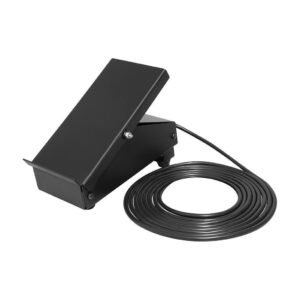
Jasic JFC-08 TIG Foot Pedal for JT-202D, JT-202A, JT-315MWD and JT-300P
JFC-08£259.07 ex VAT£310.88 inc VAT -
 NewarcNA9910702
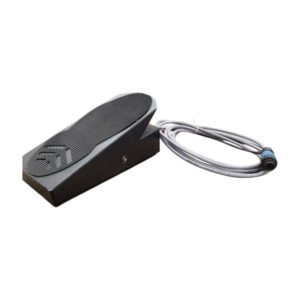
Newarc TIG Foot Control Pedal for R4000 and R5000 CC/CV
- Amperage control for TIG welding packages
NA9910702£348.26 ex VAT£417.91 inc VAT -
 ParweldXTI 902T
Parweld XTI902T Standard Foot Control for Welding Machines, 2.8m Cable
- Gives consistent amperage adjustment
- Rubber base with anti-slip top surface
- Low-profile design for comfortable standing operation
XTI 902T£223.13 ex VAT£267.76 inc VAT
8 results
Helpful guides
 How to Choose a Welding Machine: Amps, Duty Cycle & Power The best place to start when choosing a welding machine is with the work… Read guide
 TIG Tungsten Electrode Guide: Colours, Sizes & Grinding Choosing the right tungsten electrode and preparing its tip well makes a noticeable difference… Read guide
 TIG Welding Defects & Solutions: A Practical Troubleshooting Guide TIG welding, also called GTAW, gives the welder close control over the weld pool… Read guide
 TIG Filler Rod Types & Chart: AWS Codes and Uses Choosing TIG Filler Rods Choosing a TIG filler rod becomes easier when you start… Read guide
TIG Welders: frequently asked questions
Do I need a DC or AC/DC TIG welder?
If you weld steel or stainless, DC is all you need. If you'll TIG weld aluminium or magnesium regularly, go for AC/DC, as AC cleans off the oxide layer. You can't usually add AC to a DC machine later, so if aluminium is on the cards, it's worth buying AC/DC now. We stock both.
What amperage TIG welder do I need for my material thickness?
Go by the thickest joint you'll weld, then check the duty cycle at that current. Around 200A suits lighter work. The current you need also depends on the material and the joint, and some machines go very low for thin sheet. Our range runs from compact DC machines with pulse to 500A AC/DC machines for heavy work.
How many amps do I need to TIG weld aluminium?
As a starting point, allow about 40A per millimetre. So for 3mm you'd be at around 120A, and for 5mm around 200A. Aluminium draws heat away quickly, so it can need more, especially on larger pieces, and thicker sections may need preheating. If you mostly weld thin to medium sheet, a 200A AC/DC machine is a good place to start. For thicker work, look at 300A and above, which will usually need a three phase supply.
Can I run a TIG welder from a 13A plug, or do I need 16A, 32A or three phase?
It depends on the machine, so check the listing and manual. Many compact single phase TIG welders are made for a 16A supply, and some need more. Around half of our single phase range also runs on 110V, at a lower output. Larger machines need 400V three phase and won't run on single phase. Using a supply that's too small can trip the breaker or limit the output. Our rating plate guide explains what to look for, and an electrician can tell you what you have.
When do I need a water cooled TIG welder?
If you weld up to about 200A, an air cooled torch is usually fine. Above that, or if you weld at high current for long spells, water cooling is worth having, and manufacturers recommend it for regular shop work at 300A or more. A water cooled torch is also smaller and lighter for its rating. You'll need a cooling unit to go with it, so check the torch's rated current and duty cycle too.
What gas do I need for TIG welding?
Pure argon. It's the usual choice for steel, stainless, aluminium and titanium. Helium mixes give a hotter arc, but they cost more. Whatever size of bottle you use, you'll need an argon regulator and a 0 to 15 L/min flowmeter. Check the flow your torch and job need.
Are the torch and earth lead included with a TIG welder?
It depends which option you choose. Packages often come with a torch and earth lead, and sometimes a gas hose and argon regulator as well. Machine only options are for people who already have a torch or want to pick their own. Check what's listed before you order, as you may also need gas, tungsten, filler rods and, if you want one, a foot pedal.